

Magnetism is one of those science topics that sounds simple at first and then quietly opens into a much bigger world. A child playing with fridge magnets, a compass pointing north, an electric motor spinning in a fan, and Earth itself acting like a giant magnetic shield are all part of the same story. In basic terms, magnetism is the force linked to magnetic fields, and those fields are created by moving electric charges and by the tiny magnetic behavior of particles inside matter. That is why magnetism is not just about magnets on a refrigerator door. It is tied to electricity, materials, technology, and even the way our planet protects us from space radiation.
People often think of magnetism as a neat little science fact. But it is much more than that. It is one of the quiet forces behind modern life. Without magnetism, we would not have many of the machines and systems that run homes, hospitals, factories, vehicles, and communication networks. It is also deeply connected to the electromagnetic force, one of the fundamental interactions in nature.
Electricity and magnetism are not separate worlds. They are two sides of the same physical reality. When charges move, magnetic fields appear. When magnetic fields change, electric fields can be produced. That simple relationship is one of the most powerful ideas in physics.
Table of Contents
What Magnetism Really Means
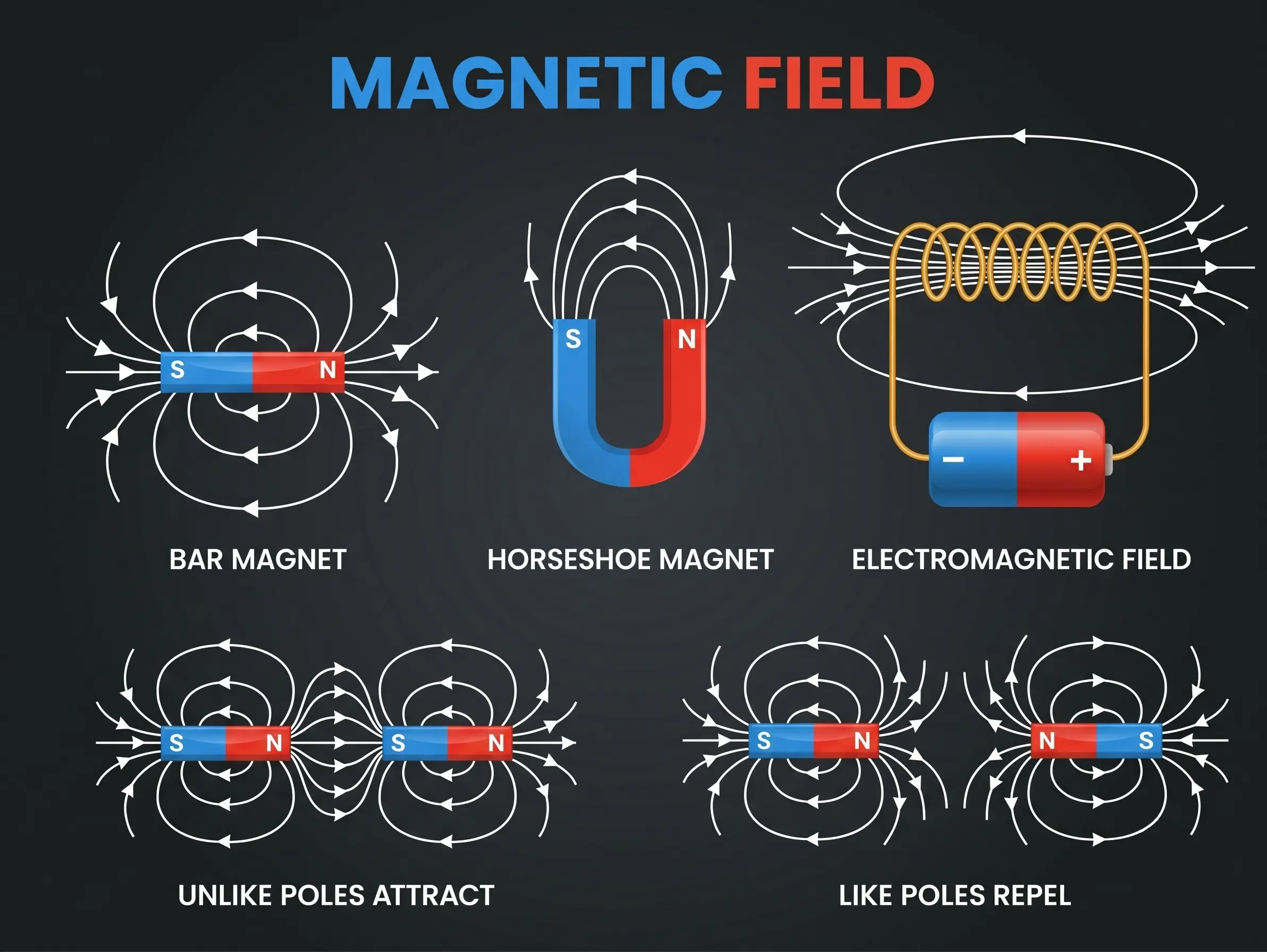
Magnetism is the phenomenon associated with magnetic fields. These fields can attract, repel, guide, or influence certain materials and moving charges. A magnet creates a region around itself where magnetic effects are noticeable. That invisible region is the magnetic field. You cannot see it directly, but you can see what it does. A compass needle turns. Iron filings line up. A piece of iron moves toward a magnet. That is magnetism at work.
The most familiar magnets have two ends called poles, known as the north pole and south pole. Like poles repel each other, and unlike poles attract each other. That rule sounds small, but it explains a lot. It is why magnets can snap together, why a compass needle settles in a certain direction, and why magnetic materials behave the way they do in the presence of a field.
At the particle level, magnetism comes from the motion of electrons. Electrons contribute to magnetism through their orbital motion and spin. In many materials, these tiny magnetic effects cancel out. In others, they add up in a noticeable way. That is why some materials barely respond to a magnetic field while others respond strongly.
Why Magnetism Matters in Everyday Life
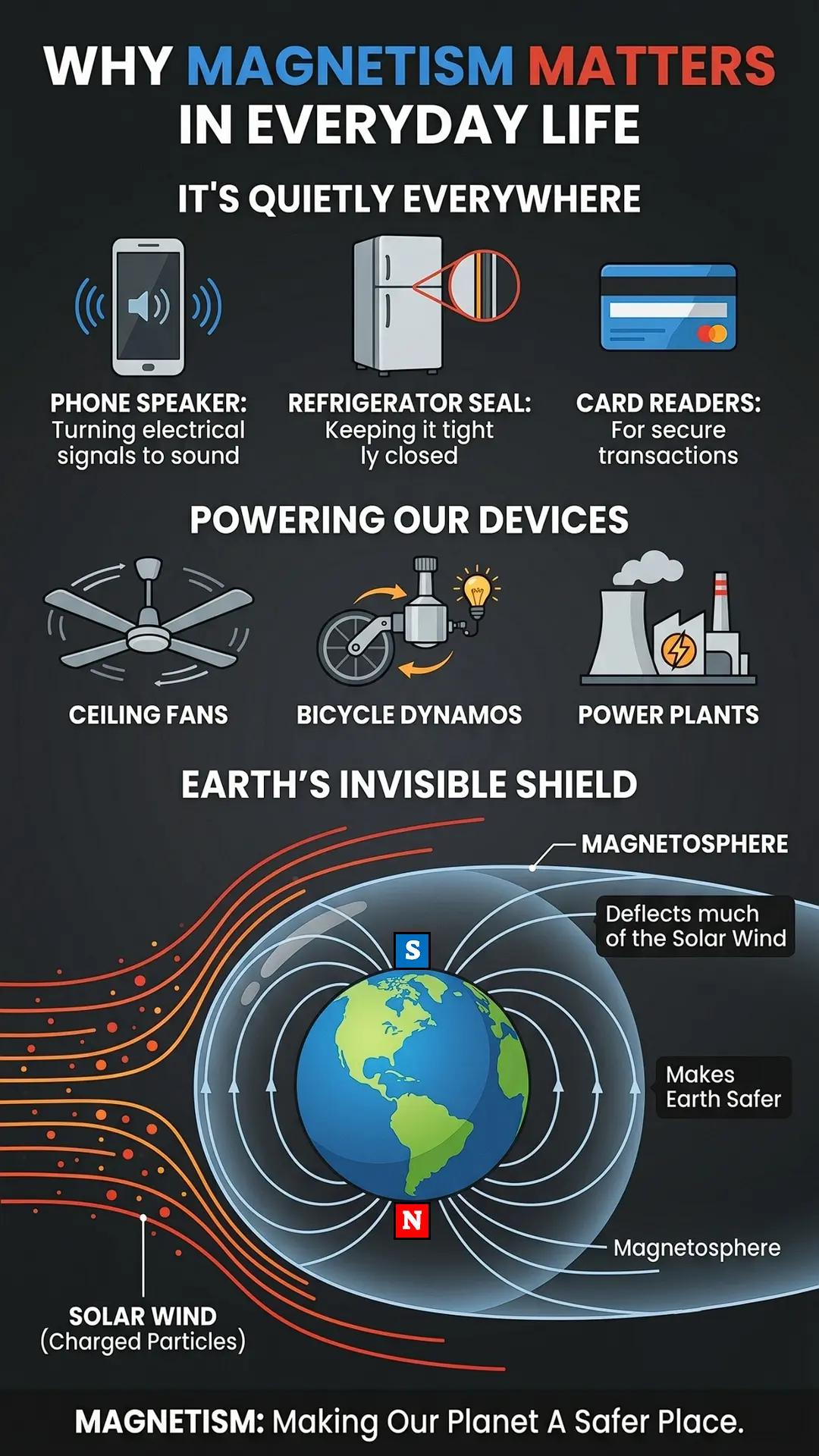
It is easy to underestimate magnetism because it works quietly. But if you look around, it shows up almost everywhere. A phone speaker uses magnetic effects to turn electrical signals into sound. A refrigerator door may use magnetic strips to stay sealed. A bicycle dynamo, a ceiling fan, a washing machine, and a power plant all use magnetic principles in one form or another. Even the card readers and payment systems people rely on every day have used magnetic technology in different ways.
Magnetism also matters because it helps us understand Earth’s magnetic field. Earth is surrounded by a huge magnetic region called the magnetosphere. This field deflects much of the solar wind, which is a stream of charged particles coming from the Sun. Without that protection, life on Earth would face a much harsher environment. In a very real sense, magnetism helps make our planet a safer place.
A Simple Look at How Magnetism Works
Magnetism becomes easier to understand when you picture it as an invisible pattern around a magnet or a current-carrying wire. Those patterns are called magnetic field lines. They show direction and strength. Where the lines are crowded, the field is stronger. Where they spread out, the field is weaker. This is a helpful way to visualize something that cannot be seen directly.
Here is the simple idea behind it:
- A moving electric charge creates a magnetic field.
- A changing magnetic field can create an electric field.
- Magnetic fields can push or pull certain materials and moving charges.
- The behavior depends on the material, the strength of the field, and the arrangement of its tiny magnetic parts.
That is why magnetism is closely tied to electricity. A wire carrying current behaves like a magnet. A coil of wire can make a stronger magnetic field. And if the current changes, the magnetic field changes too. That relationship powers electromagnets, motors, generators, and many other devices.
The Story of Magnetism in Nature
Nature gives us magnetism in several forms. The most obvious one is the natural magnet. Another major example is Earth itself. Earth acts like a giant magnet because of electrical currents in its molten outer core. These currents are part of the geodynamo, the process that creates and maintains the planet’s magnetic field.
This magnetic field is not just a scientific curiosity. It helps form the magnetosphere, the protective bubble around Earth. The magnetosphere shields the planet from much of the solar wind and some cosmic radiation. It is one of the reasons Earth can support life in the way it does.
Magnetism also appears in living systems and in minerals found in the ground. Some organisms, such as certain bacteria, can respond to magnetic fields. Some rocks preserve traces of old magnetic fields, which help scientists study Earth’s history. So magnetism is not only useful in machines. It is also part of the natural record of our planet.
Main Types of Magnetism
Magnetic behavior is usually grouped into a few broad categories based on how materials respond to a magnetic field. These categories help explain why some objects are strongly attracted, some are weakly attracted, and some are weakly repelled.
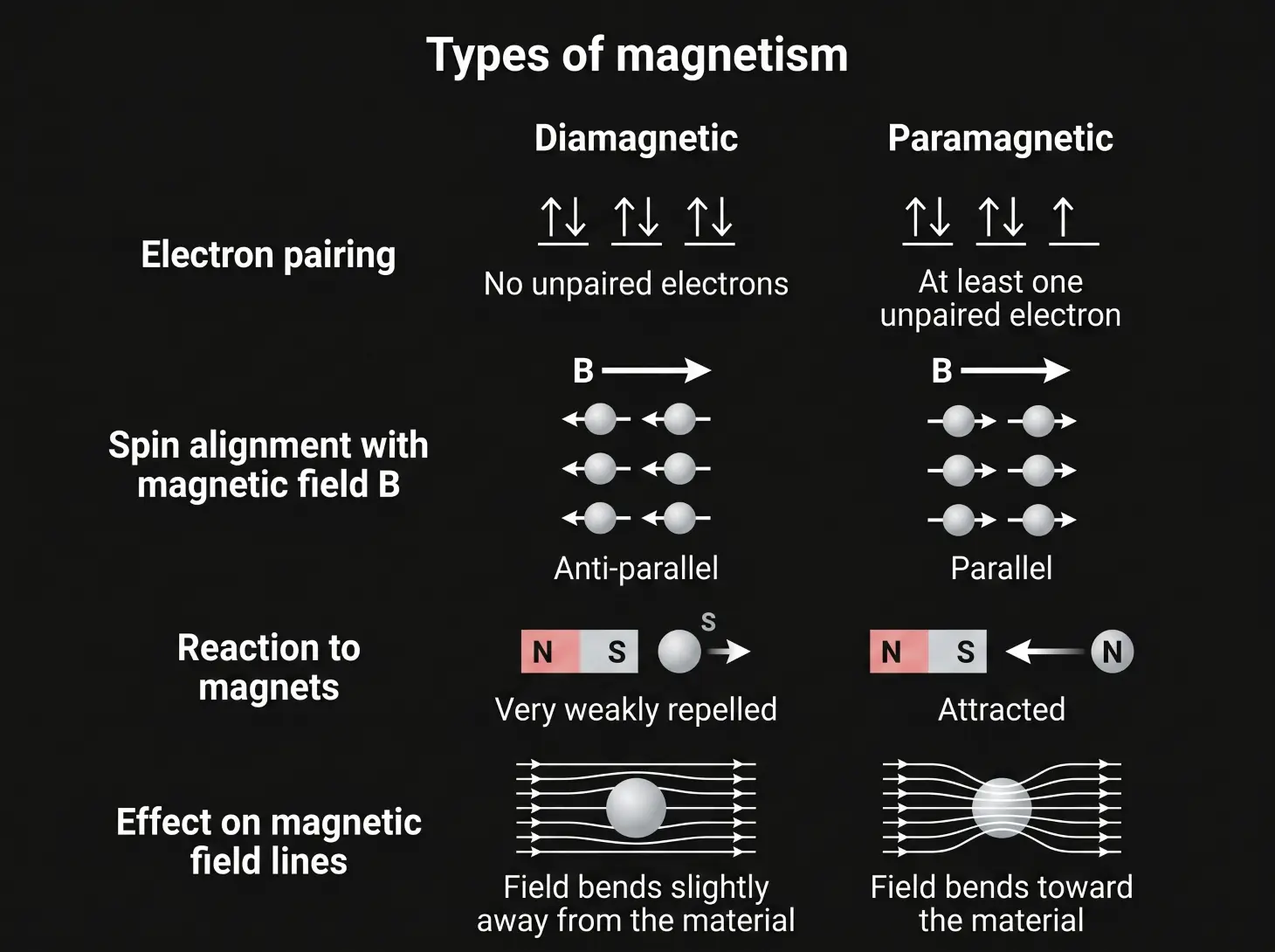
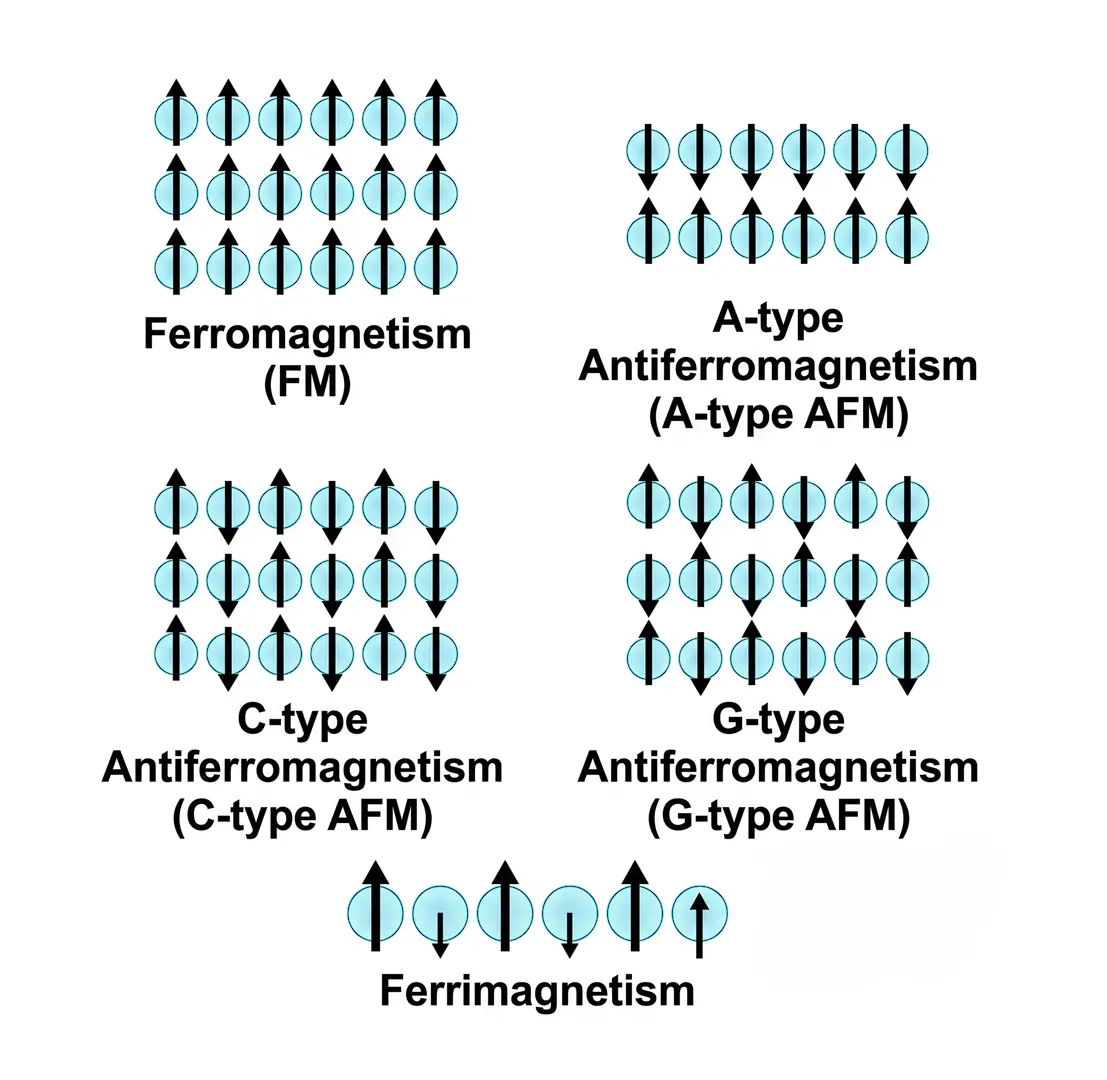
Table 1. Main Types of Magnetic Behavior
| Type | How it behaves in a magnetic field | Typical examples | Important note |
|---|---|---|---|
| Diamagnetism | Weakly repelled by a magnetic field | Copper, bismuth, water, many organic materials | Present in all materials, but often very weak |
| Paramagnetism | Weakly attracted by a magnetic field | Aluminium, oxygen, some metal ions | Atoms have unpaired electrons, but the effect is usually small |
| Ferromagnetism | Strongly attracted and can retain magnetism | Iron, nickel, cobalt, some alloys | Magnetic domains can align strongly |
| Ferrimagnetism | Strong attraction with internal opposing alignment | Many ferrites | Similar to ferromagnetism, but not identical |
| Antiferromagnetism | Neighboring magnetic moments oppose each other | Some transition metal compounds | Net magnetism can nearly cancel out |
The broad classification above is the standard way physicists describe how matter reacts to magnetism. In practical terms, ferromagnetic materials are the most familiar because they can become permanent magnets or respond very strongly to magnetic fields. Their behavior comes from the alignment of tiny regions called domains.
What Are Magnetic Domains?
Inside a ferromagnetic material, the atoms are not always lined up as one perfect magnetic group. Instead, they form tiny regions called magnetic domains. Within each domain, many atomic magnetic moments point in the same direction. When more domains line up together, the material becomes more magnetic. That is why an iron object can become magnetized when exposed to a magnetic field.
If the domains point in random directions, the magnetic effect cancels out or becomes weak. If many domains are aligned, the material shows strong magnetism. This is one reason permanent magnets work so well. Their internal structure supports a stable alignment of domains.
This domain idea is simple, but it explains a lot. It helps us understand why some pieces of iron become magnets and others do not stay magnetized for long. It also explains why heating or striking a magnet can weaken it. Heat and vibration disturb the domain alignment.
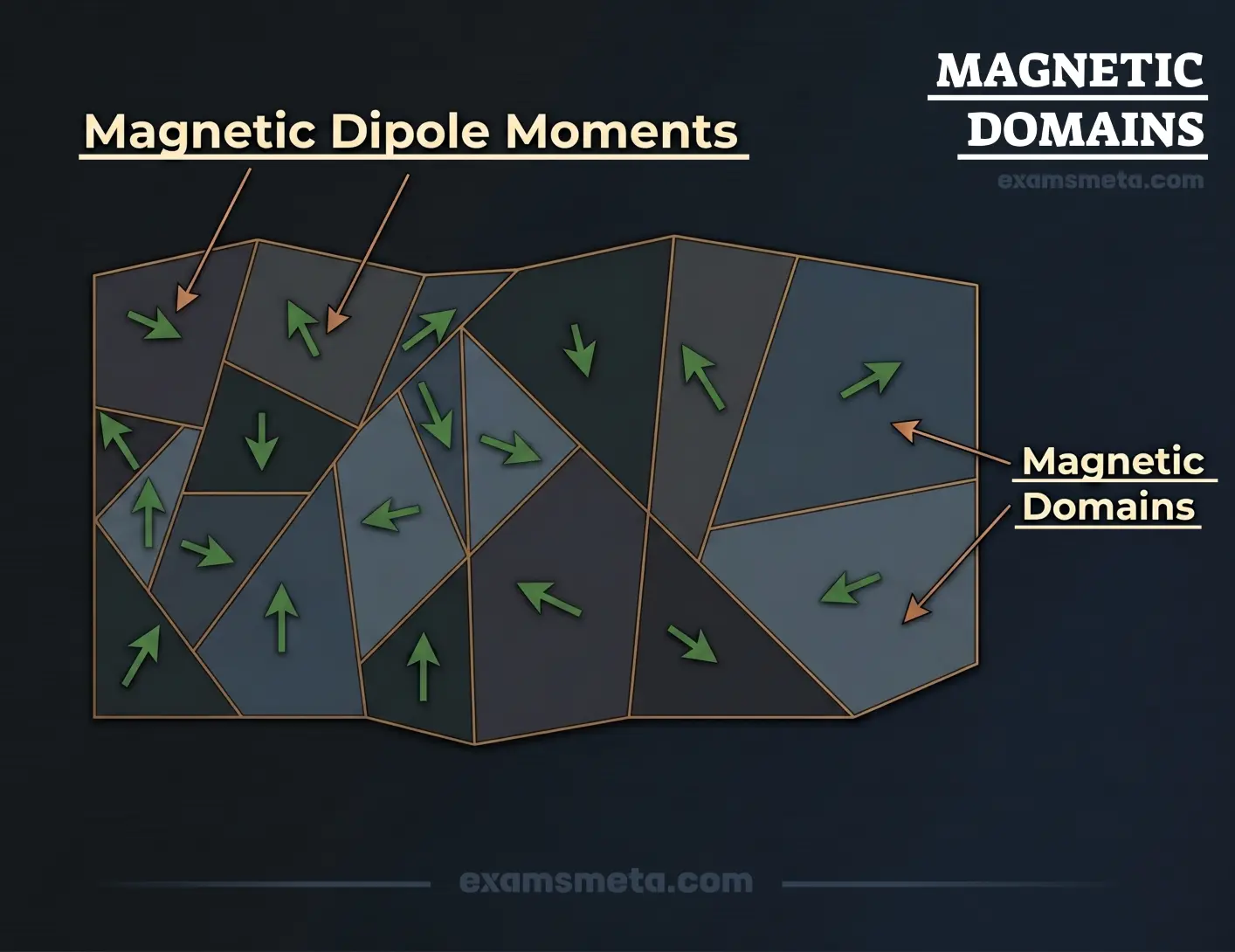
Table 2. Magnetic Domains and Their Role
| Feature | What it means | Why it matters |
|---|---|---|
| Domain | A small region where magnetic moments line up | Explains how magnets form inside materials |
| Aligned domains | Many domains point in the same direction | Produces stronger magnetism |
| Random domains | Domains point in different directions | Magnetism cancels out or becomes weak |
| Domain movement | Domains can grow, shrink, or reorient in a field | Explains magnetization and demagnetization |
| Demagnetization | Loss of alignment | Happens by heat, shock, or opposing fields |
Permanent Magnets and Temporary Magnets
A permanent magnet keeps its magnetic properties for a long time. A temporary magnet becomes magnetic only while it is near a magnetic field or when current flows through it. This difference matters in everyday devices. A refrigerator magnet is designed to keep its magnetism. An electromagnet usually acts like a magnet only when powered.
Permanent magnets are made from materials that hold their domain alignment well. Modern strong permanent magnets often use special alloys. These materials are engineered, so their internal structure resists demagnetization. That is one reason they can be small yet powerful.
Temporary magnets are just as important. They are used in devices where magnetism must be controlled, switched on, switched off, or adjusted. That is the beauty of magnetism in engineering. It can be stable when needed and flexible when needed.
Table 3. Permanent vs Temporary Magnets
| Feature | Permanent Magnet | Temporary Magnet |
|---|---|---|
| Magnetism lasts | Long time | Only while field or current is present |
| Best use | Compasses, speakers, locks, sensors | Relays, cranes, motors, lab equipment |
| Energy needed | No continuous power | Often needs electricity |
| Strength control | Limited adjustment | Easy to control by changing current |
| Example materials | Neodymium, alnico, some ferrites | Soft iron cores in electromagnets |
The Link Between Magnetism and Electricity
This is where magnetism becomes especially interesting. A moving electric charge creates a magnetic field. That means electric current and magnetism are not separate in practice. They are linked by electromagnetism. This idea changed physics and technology forever.
When current flows through a wire, the wire acts as if it has a magnetic field around it. When the wire is shaped into a coil, the field becomes stronger. Add an iron core, and the effect can increase further. This is the basic principle behind an electromagnet. When the current stops, the magnetic field usually stops too. That gives humans a great deal of control.
This relationship is behind many practical tools:
- Electric motors
- Generators
- Transformers
- Relays
- Loudspeakers
- Doorbells
- MRI systems
A modern world without this connection would look very different. Power systems would be less efficient. Machines would be less compact. Communication devices would be far harder to design. Magnetism is not just a classroom topic. It is a working part of modern civilization.
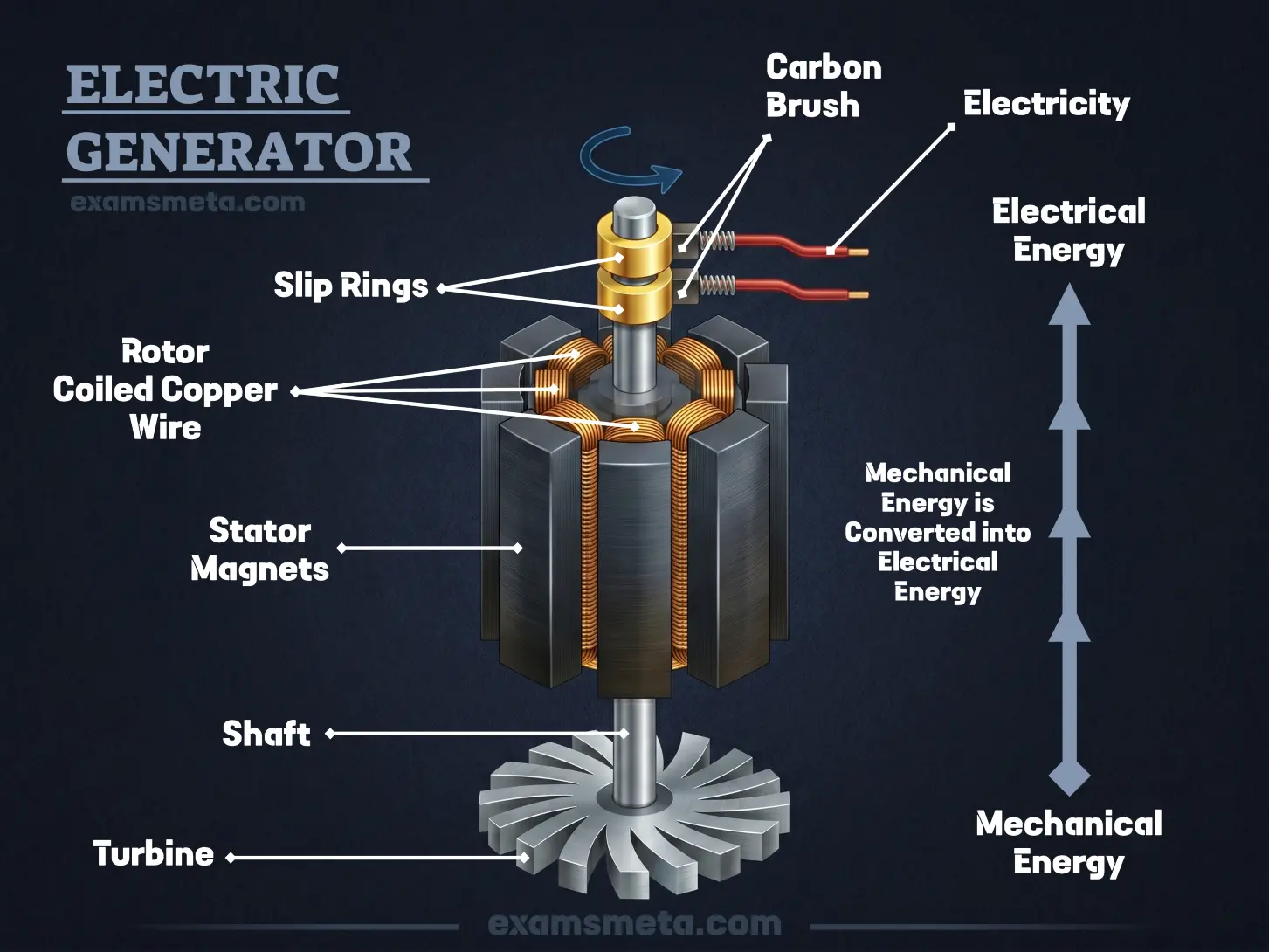
Magnetism in Daily Life
You do not need a physics lab to see magnetism. It is already around you. Sometimes you notice it directly. Sometimes it is hidden inside a device. Either way, it is doing real work.
Everyday examples of magnetism
- Refrigerator magnets hold notes, photos, and reminders.
- Compasses use Earth’s magnetic field to show direction.
- Speakers and headphones convert electrical signals into sound with magnetic parts.
- Electric fans and mixers use magnetic effects inside motors.
- Door latches and cabinet locks sometimes use magnetic closures.
- Magnetic strips and sensors help with security and detection in many systems.
- Induction cooktops use rapidly changing magnetic fields to heat cookware.
The everyday side of magnetism is what makes the topic feel alive. It is not an abstract law sitting in a textbook. It is a practical force shaping the routines people depend on. And once you notice it, you start seeing it everywhere.
Where Magnetism Appears in Technology
Technology uses magnetism in a huge number of ways. Some are visible, like a magnet on a refrigerator. Others are hidden deep inside machines and circuits. The list is long because magnetism is versatile. It can store, move, measure, convert, guide, and protect.
Table 4. Major Technological Uses of Magnetism
| Technology | How magnetism helps | Why it matters |
|---|---|---|
| Electric motors | Magnetic fields create motion | Powers fans, pumps, tools, appliances |
| Generators | Motion and magnetic fields produce electricity | Helps generate power |
| Transformers | Changing magnetic fields transfer energy between coils | Supports power transmission |
| Speakers | Magnetic force moves a cone to make sound | Used in phones, radios, TVs, computers |
| MRI machines | Strong magnetic fields help form medical images | Important in medical diagnosis |
| Data storage | Magnetism can represent information | Used in hard drives and other systems |
| Sensors | Magnetic fields help detect position or movement | Useful in cars, phones, industry |
| Magnetic locks and latches | Magnetic attraction holds parts together | Common in doors and closures |
| Industrial cranes | Electromagnets lift heavy iron and steel | Useful in scrapyards and factories |
This table only scratches the surface. Magnetism also appears in robotics, navigation systems, electric vehicles, renewable energy systems, and scientific instruments. Its flexibility is one of the reasons engineers value it so much.
Magnetism and the Earth
Earth’s magnetic field deserves its own attention because it is one of the most useful real-world examples of magnetism. The planet’s magnetosphere acts like a protective shell. It deflects many charged particles from the Sun and helps reduce the impact of harmful space weather.
Scientists describe Earth’s magnetic field as being generated by movement in the molten outer core. Electrical currents in that hot, conducting layer produce the field through the geodynamo. The exact process is complex, but the main idea is clear. A moving, electrically active fluid deep inside Earth gives rise to a planet-wide magnetic effect.
This field is not fixed forever. It changes over time. The magnetic poles drift. Field strength varies from place to place. And over long spans of geologic time, the field can even reverse. That means Earth’s magnetic history is dynamic, not frozen.
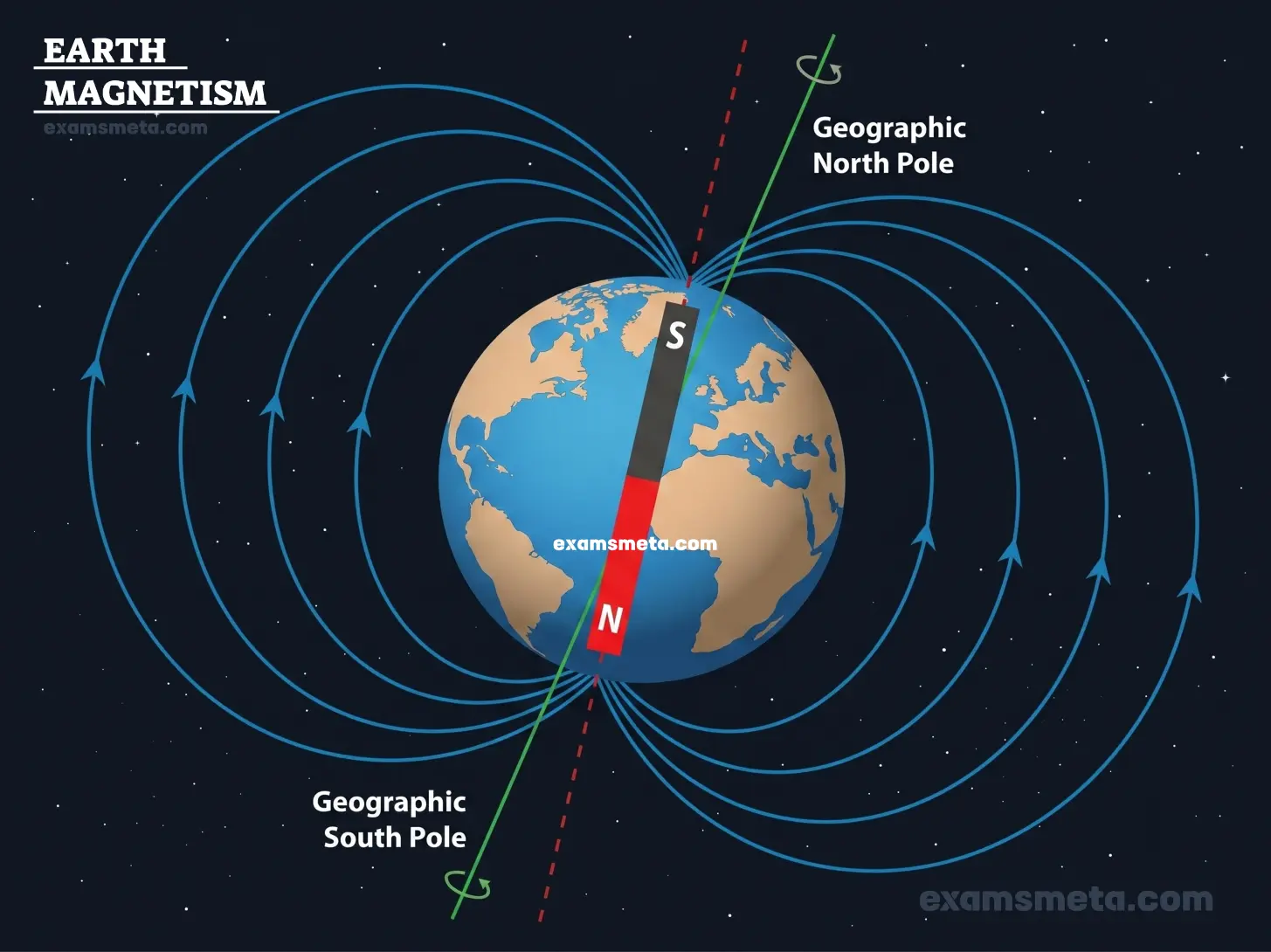
Table 5. Earth and Magnetism
| Topic | What happens | Why is it important |
|---|---|---|
| Magnetosphere | Earth’s magnetic bubble surrounds the planet | Helps shield Earth from solar wind |
| Outer core currents | Moving conductive fluid generates the field | Explains the source of Earth’s magnetism |
| Magnetic poles | They shift over time | Useful for navigation and scientific study |
| Field reversals | North and south magnetic polarity can swap over geologic time | Helps scientists study Earth’s past |
| Space weather protection | The field reduces some harmful particle effects | Important for satellites and life on Earth |
The History of Magnetism
People knew about magnetism long before they understood it. Early civilizations noticed that some stones could attract iron. These natural magnets were called lodestones. Later, humans learned to make their own magnets and use them for navigation and tools. The story of magnetism is a good example of how observation comes before theory. First, people see the effect. Then they slowly explain it.
A major turning point came when scientists began to connect electricity and magnetism. Once that link became clear, physics changed in a big way. The modern understanding of electromagnetism grew from that connection and eventually shaped the development of motors, generators, communication systems, and much of modern electrical engineering.
Another important step came from the study of magnetic materials. In the 19th century, scientists began classifying substances by how they respond to magnetic fields. That work led to the categories we still use today, like diamagnetic, paramagnetic, and ferromagnetic materials.
Important Properties of Magnetism
To understand magnetism properly, it helps to focus on its key properties. These properties explain why magnets behave the way they do and why certain materials respond so differently from others.
Table 6. Core Properties of Magnetism
| Property | Meaning | Simple example |
|---|---|---|
| Attraction | Certain materials are pulled toward a magnet | Iron nail moving toward a magnet |
| Repulsion | Like poles push away from each other | North pole near north pole |
| Field direction | Magnetic fields have a direction | Compass needle aligns with field |
| Field strength | Some fields are stronger than others | Neodymium magnet stronger than a weak fridge magnet |
| Poles | Magnets usually have two ends | North and south poles |
| Induction | Magnetism can be induced in some materials | Iron becoming magnetic near a magnet |
| Alignment | Tiny magnetic regions can line up | Domains in ferromagnetic materials |
| Persistence | Some materials hold magnetism longer | Permanent magnets remain magnetic |
A useful thing to remember is that magnetism is not always dramatic. Sometimes it is obvious. Sometimes it is subtle. A weak field can still matter, especially when many tiny effects add up or when sensitive equipment measures them.
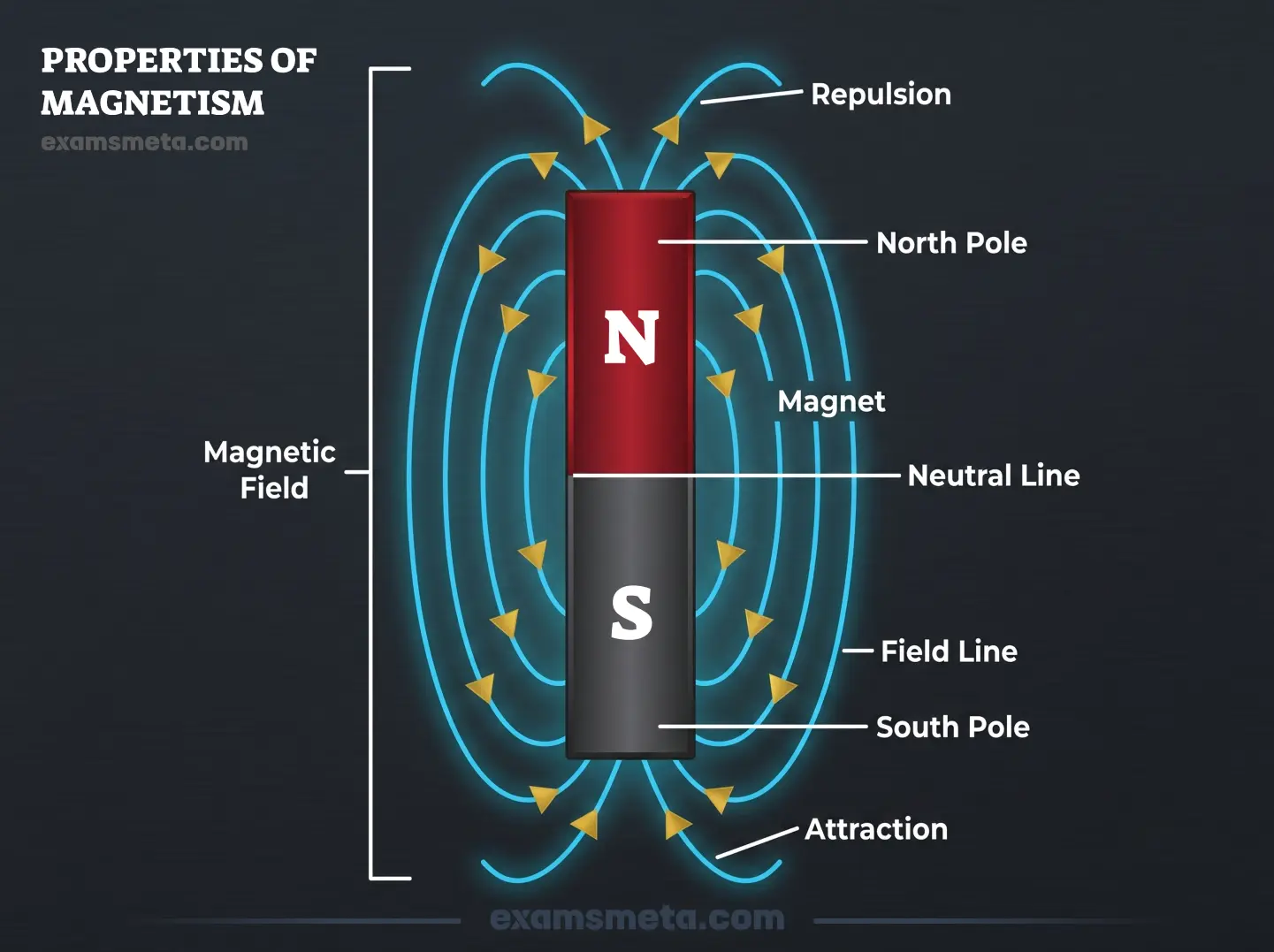
How Materials React to Magnetism
Different materials respond in different ways because their internal structures are different. This is why a magnet grabs an iron paper clip but barely reacts to wood or plastic. The response depends on electron arrangement and how the material’s magnetic moments behave.
Table 7. Common Material Responses
| Material type | Response to a magnetic field | Typical examples | Everyday note |
|---|---|---|---|
| Diamagnetic | Weakly repelled | Water, copper, bismuth | Usually not noticed in daily life |
| Paramagnetic | Weakly attracted | Aluminium, oxygen | The effect is usually very small |
| Ferromagnetic | Strongly attracted | Iron, nickel, cobalt | Used in magnets and many devices |
| Ferrimagnetic | Strong response with partial cancellation | Ferrites | Common in electronic parts |
| Antiferromagnetic | Opposing moments balance out | Some oxides and compounds | Often important in research |
This table gives a practical picture of why not all metals are magnetic. Many people assume all metals attract magnets, but that is not true. Iron, nickel, and cobalt are the classic examples, while many other metals respond only weakly or not in a noticeable way.
Magnets Are Not All the Same
There is more than one kind of magnet in real life. Shape, material, and internal structure all matter. A small but well-made magnet can outperform a larger, weaker one. That is because magnetism is not only about size. It is also about how the material is arranged.
Common forms of magnets
- Bar magnets are classic teaching tools with two poles at the ends.
- Horseshoe magnets bring poles closer together, which can make the field stronger at the gap.
- Disc magnets are compact and common in small devices.
- Ring magnets are often used in motors and sensors.
- Needle magnets are used in compasses and small instruments.
There are also special magnets made from engineered alloys. Some modern rare-earth magnets are extremely strong for their size. These magnets are used in compact electronics, high-performance motors, and other demanding applications.
Magnetism in Science and Medicine
Magnetism is not just a topic for school lessons. It is also an important scientific tool. Researchers use magnetic fields to study materials, atoms, space, and biological systems. In medicine, magnetic fields play a major role in imaging. MRI uses powerful magnetic fields and radio waves to create detailed pictures of soft tissues inside the body. That makes it a vital diagnostic tool.
Magnetism is also used in laboratory instruments to test materials and study how matter responds under different conditions. Scientists care about these responses because they reveal hidden details about structure, bonding, and electronic behavior. In many cases, magnetism acts like a fingerprint for the inside of a substance.
Space science depends on magnetism too. The study of Earth’s magnetic field helps scientists understand space weather, satellite safety, and the interaction between the Sun and our planet. That makes magnetism important not only on the ground but far above it.
Everyday Examples That Make Magnetism Easier to Remember
Sometimes the best way to understand a science topic is to connect it with ordinary life. Magnetism is full of simple examples like these.
- A compass needle points because it aligns with Earth’s magnetic field.
- A fridge magnet sticks because of magnetic attraction.
- A speaker works because a magnetic field pushes a cone back and forth.
- An electric motor rotates because current and magnetism interact.
- A scrap-yard crane lifts iron using a powerful electromagnet.
- A magnetic latch closes a cabinet door without a mechanical lock.
- A hard drive stores information using magnetic patterns.
These examples are useful because they show one clear truth. Magnetism is not isolated in the lab. It is woven into daily routines, tools, transport, health care, and communication. That makes it a great topic for readers who want both science and practical meaning.
The Strength of Magnetism Depends on Many Things
Magnetic strength is not just a single number. It depends on the material, the shape, the temperature, the distance, and whether the field is changing. This is why one magnet can feel weak in one situation and strong in another.
A few general ideas help here:
- A magnet feels weaker as distance increases.
- Some materials concentrate magnetic fields better than others.
- Heat can weaken magnetization by disturbing domain alignment.
- A stronger field can align more domains in a material.
- Electromagnets can be adjusted by changing the current.
This is a good reminder that science is rarely about one isolated fact. It is about relationships. Magnetism changes with conditions, and those conditions are what make it useful in real systems.
Why Some Things Become Magnetic, and Others Do Not
A lot of people wonder why one object is magnetic while another one is not. The answer lies in the arrangement of electrons. In some materials, electrons pair up in a way that cancels their magnetic effects. In others, unpaired electrons and internal interactions allow magnetism to show up more clearly.
That is why iron is magnetic, but plastic is not. It is also why different kinds of metals behave differently. The internal structure matters more than the simple label “metal.” That is one of the reasons magnetism is such an interesting topic. It forces us to look beneath the surface.
Practical Lessons from Magnetism
There is a reason magnetism shows up in school science and engineering courses, and everyday problem-solving. It teaches a few lasting lessons:
- Small invisible effects can create big visible results.
- The structure of matter changes how it behaves.
- Motion and field are deeply connected.
- A controlled force is often more useful than a fixed one.
- Nature and technology often use the same principles in different ways.
That last point is especially important. The magnetosphere around Earth and the magnetic field inside a motor are not the same thing, but they follow related physical rules. Science often works like that. One idea stretches across many scales, from atoms to planets.
A Broader View of Magnetism
When people first hear the word magnetism, they usually imagine a bar magnet. That is understandable, but it is only the beginning. Magnetism is a physical principle that helps explain material behavior, energy transfer, and planetary protection. It also sits at the heart of electromagnetism, which connects electricity, magnetism, and light in a single framework.
This broader view matters because it changes the way we think about science. Magnetism is not a side topic. It is a core part of how the universe works at many levels. In atoms, it helps shape the behavior of electrons. In machines, it powers motion and sound. In space, it helps shield Earth. That is a lot for one idea to carry, and yet magnetism does it quietly and consistently.
Final Thoughts on Magnetism
Magnetism is simple enough to introduce with a fridge magnet and deep enough to fill a lifetime of study. It explains how some materials attract, why compasses work, how electric machines run, and how Earth protects itself from the Sun’s charged particles. It also shows that the world is full of invisible forces that become visible through their effects.
That is what makes magnetism such a strong topic for readers everywhere. It is scientific, practical, and easy to connect with daily life. It teaches both curiosity and usefulness. And once you understand the basic idea, you start noticing it in places you never expected. A speaker. A motor. A compass. A medical scanner. A planet. All of them tell part of the same story.
Article References and Sources
- Encyclopaedia Britannica. Magnetism.
- Encyclopaedia Britannica. Electromagnetism.
- U.S. Department of Energy. DOE Explains: The Electromagnetic Force.
- NASA: Earth’s Magnetosphere: Protecting Our Planet from Harmful Space Energy.
- NASA. Exploring Earth’s Magnetic Fields.
- NASA. Introduction to Magnetism Educational Guide.
- National High Magnetic Field Laboratory. Magnetic Domains Interactive Tutorial.
- NDT Resource Center. Magnetic Materials.
- NDT Resource Center. Electromagnetism.
- University of Minnesota. Classes of Magnetic Materials.
- Encyclopaedia Britannica. Magnetic Properties of Matter.
Also, Read these Articles in Detail
- Physics and Its Fundamentals With Good Explanations
- Matter, Motion, and Energy: The Core Ideas of Physics
- What Is Matter? The Physical Substance of the Universe
- What Is Motion? A Guide to Motion in Physics and Daily Life
- What Is Energy? The Invisible Power Behind Everyday Life
- Kinetic Energy Explained in Simple Language
- Potential Energy: Definition, Types, Formula, and Examples
- Thermal Energy: Heat, Temperature, and Transfer
- Mechanical Energy: Definition, Formula, and Examples
- Chemical Energy: Definition, Science, and Examples
- Electrical Energy: Definition, Works, and Why It Matters
- Radiant Energy: Meaning, Sources, Examples, and Uses
- Nuclear Energy: Definition, How It Works, and Why It Matters
- Sound Energy: Definition, Science, and Examples
- Elastic Energy: Definition, Elasticity, and Example
- Geothermal Energy: Clean Electricity, Heating, and Modern Life
- Hydropower Energy: How It Works and Its Importance
- Pumped Hydropower Storage
- Force: Meaning, Types, Formula, and Examples
- Mechanics: Motion, Forces, Energy, and Applications
- Wave: Types, Properties, Motion, and Uses
- The International SI System
- Temperature: Meaning, Measurement, Scales, and Examples
- Electricity: Science, Uses, Safety, and Importance
Frequently Asked Questions
FAQ 1: What is magnetism in simple words?
Magnetism is the force that makes some objects attract or repel each other. It is caused by magnetic fields, which are invisible areas around magnets, moving electric charges, and some materials. You may not be able to see a magnetic field, but you can easily see what it does. A magnet can pull an iron nail toward it. A compass needle can turn and point in a certain direction. A refrigerator magnet can hold a note in place. All of these are everyday examples of magnetic force at work.
Magnetism is closely connected to electricity. In many cases, when electric charges move, they create magnetism. That is why magnetism is not just about a piece of metal sticking to a fridge. It is part of a much bigger scientific idea that helps explain motors, generators, speakers, and even Earth’s magnetic field. When people learn magnetism for the first time, they often think of it as a small topic. But once they understand it better, they realize it is one of the most useful ideas in science and daily life.
FAQ 2: What are the main types of magnetism?
The main types of magnetism are diamagnetism, paramagnetism, ferromagnetism, ferrimagnetism, and antiferromagnetism. Each one describes how a material reacts when it is placed in a magnetic field. Some materials are weakly repelled. Some are weakly attracted. And some are strongly attracted and can even become magnets themselves.
Diamagnetic materials are weakly repelled by magnetic fields. Water, copper, and bismuth are examples. Paramagnetic materials are weakly attracted. Aluminium and oxygen are common examples. Ferromagnetic materials are the most familiar because they can become strong magnets. Iron, nickel, and cobalt belong to this group. Ferrimagnetic materials also show strong magnetic behavior, but their internal alignment is a little different. Antiferromagnetic materials have magnetic parts that point in opposite directions, so their effect often cancels out.
This classification helps us understand why some objects stick to magnets and others do not. It also helps scientists design useful materials for electronics, medicine, and engineering. So when you hear the word magnetism, it is really a family of different behaviors, not just one single thing.
FAQ 3: Why are some materials magnetic and others are not?
Some materials are magnetic because of the way their electrons are arranged inside atoms. Electrons have a property called spin, and they also move in ways that create magnetic effects. In many materials, these effects cancel out. In magnetic materials, the effects add up in a noticeable way. That is why a piece of iron can respond strongly to a magnet while wood, plastic, or many other materials do not.
The internal structure of a material matters a lot. In ferromagnetic materials, tiny magnetic regions called domains can line up in the same direction. When that happens, the material becomes magnetic. If the domains are random, the material may not show much magnetism at all. That is why the same metal can behave differently depending on how it is treated, heated, shaped, or exposed to a magnetic field.
So the simple answer is this. A material is magnetic when its tiny internal magnetic effects work together instead of canceling each other out. That is the reason some substances become magnets, some respond only a little, and some hardly react at all.
FAQ 4: What is the difference between a permanent magnet and an electromagnet?
A permanent magnet keeps its magnetic properties for a long time without needing electricity. A refrigerator magnet is a simple example. A permanent magnet is made from material that holds its magnetic domains in a stable alignment. Once it is magnetized, it can keep working for years or even longer.
An electromagnet, on the other hand, works only when electric current flows through it. It is usually made by wrapping wire into a coil and sometimes adding an iron core. When the current flows, the coil creates a magnetic field. When the current stops, the magnetic field usually disappears. That makes an electromagnet very useful because it can be turned on and off whenever needed.
This difference is important in real life. Permanent magnets are used in compasses, speakers, and simple magnetic closures. Electromagnets are used in motors, cranes, relays, doorbells, and many industrial machines. The big advantage of an electromagnet is control. You can change its strength by changing the current. That flexibility makes it one of the most useful tools in modern technology.
FAQ 5: How does a magnetic field work?
A magnetic field is the invisible area around a magnet or moving electric charge where magnetic effects can be felt. It is what allows magnets to pull, push, or influence certain materials. Even though you cannot see a magnetic field directly, you can observe its behavior through things like iron filings, compass needles, or the movement of another magnet.
Scientists often describe magnetic fields using field lines. These lines show the direction and strength of the field. When the lines are close together, the field is stronger. When they spread out, the field is weaker. Around a magnet, the lines usually run from the north pole to the south pole outside the magnet. This helps people understand how the field is shaped and how it affects nearby objects.
Magnetic fields matter because they are the reason magnets do anything at all. Without them, a magnet would just be a piece of material with no special behavior. So when people talk about magnetism, they are really talking about the field around the magnet and the force that field can create.
FAQ 6: What are magnetic poles, and why do they matter?
Every common magnet has two poles, called the north pole and the south pole. These poles are the ends of the magnet where the magnetic effect is strongest. The poles matter because they decide how magnets interact with one another. Unlike poles attract, while like poles repel. That is one of the most basic and important rules in magnetism.
This is easy to test. If you bring the north pole of one magnet close to the south pole of another, they pull together. But if you bring two north poles together, they push apart. The same happens with two south poles. This behavior is part of what makes magnets so useful and so predictable.
Magnetic poles also help explain how compasses work. A compass needle is a small magnet. It aligns itself with Earth’s magnetic field, which is why the needle points roughly north and south. So poles are not just labels. They are the key to understanding how magnets move, interact, and guide us in practical life.
FAQ 7: How does magnetism appear in everyday life?
Magnetism shows up in many ordinary things, often without people noticing. A compass uses magnetism to show direction. A refrigerator magnet sticks to a metal surface. Speakers use magnetic fields to create sound. Electric fans, mixers, and many other appliances use motors that depend on magnetism. Even a simple magnetic latch on a cabinet or bag uses this force in a practical way.
Magnetism is also behind many modern technologies. MRI machines in hospitals use very strong magnetic fields to create detailed images of the inside of the body. Electric generators use magnetic principles to produce electricity. Transformers use changing magnetic fields to move energy from one coil to another. In industry, electromagnets are used to lift heavy pieces of iron and steel. That is a huge job for a force that most people only think about when they see a magnet on a fridge.
So the truth is simple. Magnetism is part of daily life in both obvious and hidden ways. It helps us cook, travel, communicate, study, and get medical care. Once you notice it, you start seeing it everywhere.
FAQ 8: What is Earth’s magnetic field, and why is it important?
Earth’s magnetic field is a giant magnetic field that surrounds our planet. It is created deep inside the Earth by moving molten metal in the outer core. This movement produces electric currents, and those currents create the planet’s magnetic field. Together, they form the magnetosphere, which acts like a protective shield around Earth.
This field is extremely important. It helps protect the planet from much of the solar wind, which is a stream of charged particles coming from the Sun. Without this shield, Earth would be far more exposed to harmful space energy. The magnetic field also helps animals and humans with navigation, especially through compass-based direction finding.
Earth’s magnetic field is not fixed forever. It changes over time. The magnetic poles slowly shift, and over very long periods, the field can even reverse. That means Earth’s magnetism is active and living in a scientific sense, not frozen in place. It is one of the clearest examples of how magnetism works on a planetary scale.
FAQ 9: What are magnetic domains, and why are they important?
Magnetic domains are tiny regions inside some materials where the magnetic moments of atoms line up in the same direction. Think of them as small groups working together. When many domains point in different directions, the material may not seem magnetic. But when they line up in the same direction, the material can become strongly magnetic.
This idea is especially important for ferromagnetic materials like iron. When such a material is placed in a magnetic field, its domains can begin to align. If enough of them align, the material becomes a magnet. If the alignment is disturbed by heat, shock, or another field, the magnetism can weaken. That is why magnets can lose strength over time or under certain conditions.
Magnetic domains are a big part of why magnetism is not just about the outside shape of an object. The real story is happening inside the material, at a tiny level. Once you understand domains, many other magnetic behaviors make more sense.
FAQ 10: Why is magnetism important in science and technology?
Magnetism is important because it helps us understand both nature and modern machines. In science, it explains how materials behave, how atoms and electrons interact, and how Earth’s magnetic field works. In technology, it powers devices that people use every day, from electric motors and generators to speakers, sensors, and MRI scanners.
One of the biggest reasons magnetism matters is its close connection to electricity. This connection makes many modern systems possible. Without magnetism, we would not have the same kind of power generation, communication systems, transport tools, or medical imaging equipment that we rely on now. It is one of the main forces behind modern engineering.
Magnetism also teaches a deeper lesson. It shows that invisible forces can have very visible effects. A tiny change in alignment, current, or material structure can create motion, sound, energy transfer, or protection for an entire planet. That is a remarkable thing, and it is why magnetism remains one of the most useful and fascinating topics in science.
FAQ 11: What is the difference between magnetism and electricity?
Magnetism and electricity are closely related, but they are not the same thing. Electricity is usually connected with the flow of electric charges, especially electrons moving through a wire. Magnetism is connected to the effect that moving charges create around them. That means when electricity moves, magnetism can appear. And when magnetism changes, electricity can appear too. This is why the two are often studied together under electromagnetism.
A simple way to think about it is this. Electricity is often about the movement of charge itself, while magnetism is about the field that comes from that movement. For example, when current flows through a wire, a magnetic field forms around it. When that wire is shaped into a coil, the field becomes stronger. That is the basic idea behind many devices, including motors, transformers, and electromagnets. So although the two are different, they work hand in hand in many parts of modern life.
This connection is one of the most important ideas in physics. It helps explain how power moves through cities, how speakers make sound, and how many machines do useful work. In short, electricity and magnetism are separate in name, but deeply connected in practice.
FAQ 12: Why does a magnet attract iron but not wood or plastic?
A magnet attracts iron because iron is a ferromagnetic material. That means the tiny magnetic regions inside it, called domains, can line up in response to a magnetic field. When that happens, the iron becomes strongly attracted to the magnet. This is why iron nails, paper clips, and some steel objects stick so easily.
Wood and plastic, on the other hand, do not have the same internal magnetic structure. Their electrons are arranged in a way that does not produce strong magnetic alignment. So even if you bring a magnet close to them, they do not respond in the same way. They may feel no attraction at all, or only a very tiny effect that is too weak to notice in everyday life.
This difference is important because it shows that magnetism is not about the outside appearance of a material. It is about what is happening inside. Two objects can look similar but behave very differently near a magnet. That is one reason magnetism is so interesting. It reveals hidden structure in matter.
FAQ 13: How does a compass use magnetism to show direction?
A compass works because its needle is a small magnet that can turn freely. Earth itself has a magnetic field, and the compass needle lines up with that field. The needle points roughly toward the magnetic north direction, which helps people find their way.
The reason this happens is simple. Magnets experience force when they are placed in a magnetic field. The compass needle responds to Earth’s field because it has its own north and south poles. When it is free to move, it settles in the direction where the field is balanced. That is why compasses have been used for navigation for so long. They are simple, reliable, and built on a strong scientific principle.
Even today, compasses remain useful. They are used in outdoor travel, mapping, emergency navigation, and science education. And while digital devices are common, a compass still has one big advantage. It does not need batteries to work. It only needs Earth’s magnetic field, which is always there.
FAQ 14: What are magnetic field lines and what do they show?
Magnetic field lines are a visual way to represent an invisible magnetic field. They help us understand the direction and strength of the field around a magnet or magnetic object. The lines usually go from the north pole to the south pole outside the magnet. Where the lines are crowded together, the field is stronger. Where they are farther apart, the field is weaker.
These lines do not actually exist as physical strings in space. They are a scientific tool for understanding how magnetism works. Still, they are very useful because they make the invisible easier to picture. If you place iron filings near a magnet, they tend to line up in a pattern that looks like these field lines. That is a good classroom demonstration of how magnetic fields behave.
Field lines also help explain why magnets push and pull in certain ways. They show the structure of the force around the magnet, not just the magnet itself. That makes them one of the most helpful ideas in basic physics. Once people understand field lines, many magnetism problems become much easier to grasp.
FAQ 15: What is an electromagnet and how does it work?
An electromagnet is a magnet that is made by passing electric current through a wire coil. Often, the coil is wrapped around an iron core, which helps make the magnetic field stronger. When current flows, the electromagnet becomes active. When the current stops, the magnetic field fades or disappears.
This is a powerful idea because it gives people control over magnetism. A regular permanent magnet is always magnetic, but an electromagnet can be switched on and off. Its strength can also be adjusted by changing the current or by changing the number of turns in the coil. That makes it very useful in machines and tools.
Electromagnets are found in electric motors, scrap-yard cranes, relays, loudspeakers, and many scientific devices. They are valuable because they practically combine electricity and magnetism. A machine can use them to hold, move, sort, lift, or signal with great precision. That is one of the reasons electromagnetism is so important in engineering.
FAQ 16: Can magnetism be destroyed or weakened?
Yes, magnetism can be weakened or even lost under certain conditions. A magnet can lose strength if it is heated too much, struck hard, or placed in a strong opposing magnetic field. These conditions can disturb the alignment of its magnetic domains, which reduces the material’s overall magnetism.
This is one reason permanent magnets are not indestructible. They are stable, but not perfect. If the internal arrangement of the magnetic domains is damaged, the magnet becomes weaker. Some materials hold magnetism better than others, which is why certain magnets last longer and stay stronger over time.
This idea matters in real life. It explains why magnets in tools, machines, and devices need to be chosen carefully. If the wrong material is used, the magnet may not last very long. So, magnet strength is not just about how strong it is when first made. It is also about how well it can keep that strength under normal use.
FAQ 17: What are some real-world uses of magnetism in technology?
Magnetism has countless uses in modern technology. One of the best-known uses is in electric motors, which turn electricity into motion. Another is in generators, which turn motion into electricity. These two devices are central to the way modern power systems work. Without them, everyday life would look very different.
Magnetism is also used in speakers, where magnetic fields help convert electrical signals into sound. It is used in MRI machines in hospitals, where strong magnets help produce detailed images of the body. Transformers use magnetic fields to transfer energy between coils, which is important in power distribution. Sensors in phones, cars, and factories also rely on magnetism to detect movement, position, or speed.
And that is only part of the list. Magnetism also helps in data storage, magnetic locks, navigation systems, and industrial lifting equipment. It is one of the quiet forces behind modern convenience. People often do not see it, but they depend on it all day long.
FAQ 18: Why is Earth’s magnetic field important for life?
Earth’s magnetic field is important because it acts like a protective shield around the planet. It helps block much of the solar wind, which is a stream of charged particles from the Sun. Without this shield, Earth would be exposed to more harmful space energy. That would make the environment much harsher for life and for technology.
The field also helps form the magnetosphere, which surrounds Earth and redirects many charged particles away from the planet. This protection is one reason Earth is more stable and life-friendly than many other places in the solar system. It does not make Earth completely safe from space weather, but it reduces the danger significantly.
Earth’s magnetic field is also useful for navigation. Many animals and humans have used magnetic direction for travel and orientation. So the field is not just a scientific idea. It is part of the natural support system that helps life continue on Earth.
FAQ 19: What is the role of magnetic domains in permanent magnets?
Magnetic domains are the key to how permanent magnets work. Inside a magnetic material, many tiny regions can point in different directions. If those domains are random, the material is not strongly magnetic. But if they line up in the same direction, the material becomes magnetic and can stay that way for a long time.
In a permanent magnet, the domains are arranged in a stable pattern. That stable alignment gives the magnet its long-lasting magnetic behavior. The material is chosen and treated so it can resist changes that would make the domains drift apart. That is why some magnets hold their strength very well while others lose it quickly.
This idea explains a lot. It shows that a magnet is not magical. It is a material with an internal structure that has been organized in a useful way. Once you understand domains, permanent magnetism becomes much easier to understand.
FAQ 20: How can magnetism be studied simply and safely?
Magnetism can be studied safely with easy tools found in classrooms or at home. A bar magnet, a few paper clips, some iron filings, and a compass are enough to show many basic magnetic effects. You can observe attraction, repulsion, field patterns, and compass movement without any complicated equipment.
For example, if you bring a magnet near paper clips, the clips will move toward it. If you place a compass near a magnet, the needle will change direction. If you sprinkle iron filings around a magnet on a sheet of paper, they will form a pattern that reveals the magnetic field lines. These simple tests make the topic easier to see and remember.
Safety matters too. Strong magnets can pinch fingers or affect electronic devices, so they should be handled with care. But in general, magnetism is one of the safest and most fascinating science topics to explore. It invites curiosity without requiring dangerous materials. And because the effects are easy to observe, it is a great way to learn how invisible forces shape the world around us.
